
Stop Thinking Claude Code Is Magic. Here’s How It Actually Works

Hi folks, let’s be honest, most developers using Claude Code have absolutely no idea what’s happening under the hood. They feed it a prompt, magic happens, and suddenly their codebase is better. But Claude Code isn’t magic. It’s a coherent system of deeply boring technical patterns working together, and understanding how it works will make you dramatically better at using it.

The Problem With How People Think About AI Understanding
When someone says “Claude Code understands my code,” they usually mean something impossible. They mean the AI literally comprehends meaning the way humans do. That’s wrong. Claude Code doesn’t understand anything. It finds patterns. The difference matters enormously, because it changes how you should talk to it and what you can reasonably expect.
Here’s what actually trips people up, Claude Code operates on text as pure information. It has no eyes, no execution environment, no IDE open on its screen. When it reads your code, it’s doing something closer to what a search engine does than what a human developer does. It’s looking for patterns it has seen millions of times before, then predicting what comes next based on statistics about those patterns.
The moment you understand this, your expectations become realistic. You stop asking Claude Code to “understand the spirit of my codebase.” You start giving it concrete, specific patterns to match against.
How Claude Code Actually Reads Your Code
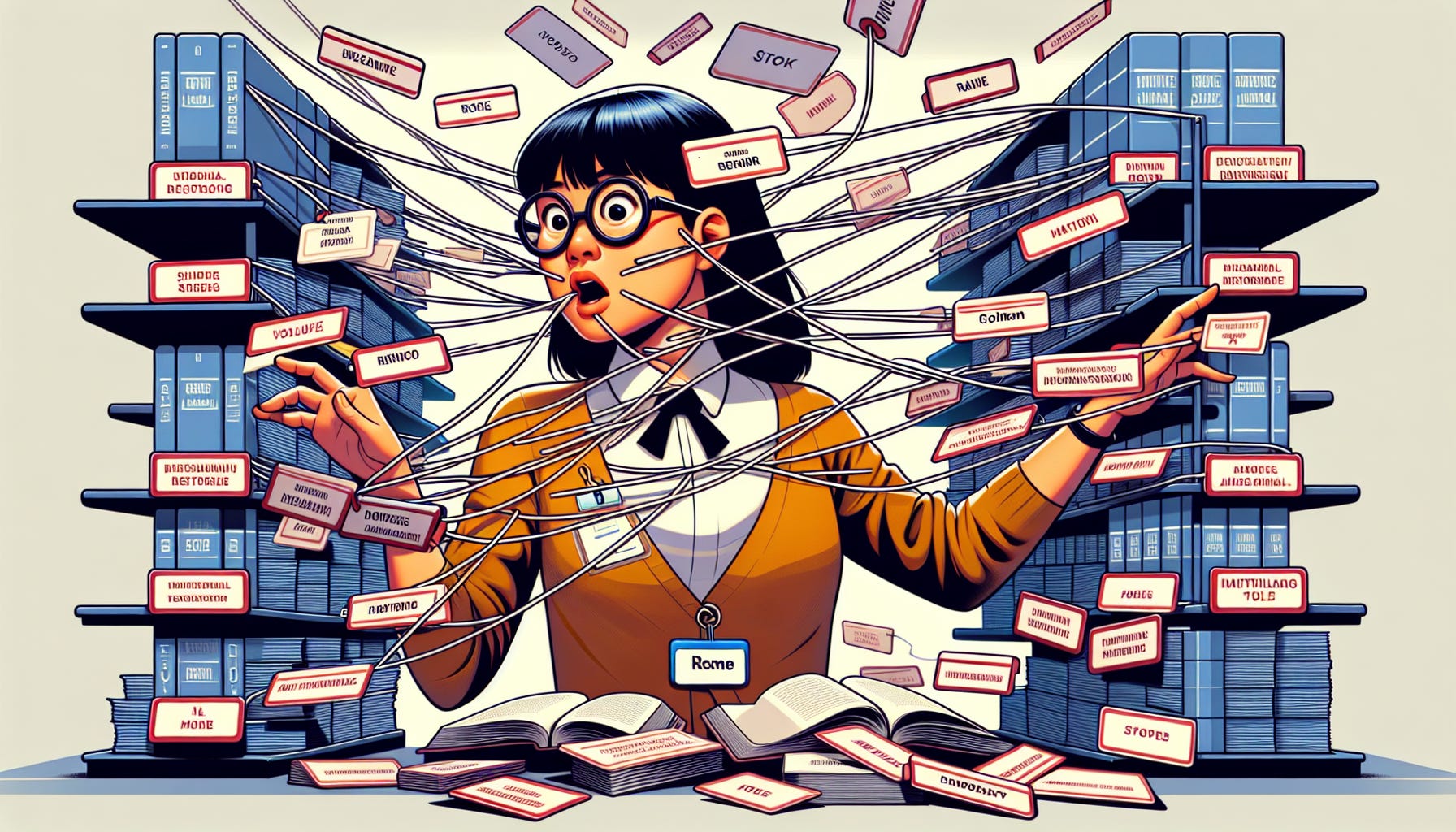
Imagine a librarian who has never read a single book but has memorized every title, subject header, and index entry from ten million libraries. Someone asks this librarian to find a book about ancient Rome. The librarian doesn’t understand Rome. But the librarian can pattern-match frantically. Rome appears next to certain titles, certain index terms, certain shelving categories. By combining millions of these patterns, the librarian confidently points you to the exact book you want.
That’s essentially how Claude Code reads your codebase.
Here’s the technical reality. When you paste code into Claude, the first thing that happens is tokenization. Your code gets chopped into tiny pieces called tokens. These aren’t words, exactly. They’re often partial words or symbols. A token might be “func” or “async” or “=” or “.”. Your ten thousand line codebase becomes tens of thousands of tokens.
Then those tokens get converted into numbers, specifically into vectors in high-dimensional space. Imagine trying to represent the meaning of the word “function” as a single point in a thousand-dimensional space. That’s roughly what’s happening. Functions in your code, functions in other codebases, and the word “function” itself all get mapped to neighboring points in this massive mathematical landscape.
Claude Code doesn’t move around this space consciously. Instead, it runs billions of mathematical operations across dense neural network layers. These layers were trained on public code repositories and fine-tuned through reinforcement learning. The network has learned which tokens tend to follow other tokens, which code patterns tend to precede which problems, and what changes tend to fix what errors.
The Transformer Architecture That Makes This Possible
Think of Claude Code’s brain as a massive hotel with hundreds of layers and thousands of staff members. Your code checks in at the front desk. Each layer processes it differently. Some staff members are obsessed with syntax and structure. Others focus on semantics and intent. Others track relationships between distant parts of the code.
This structure is called a transformer, and it’s genuinely clever. The key insight is something called attention. When processing a particular token in your code, the transformer doesn’t just look at the immediate neighbors. It can look at any other token and ask, “Is this relevant to what I’m thinking about right now?” Then it calculates relevance scores and weights them accordingly.
So when Claude Code reads a function call deep in your file, it can simultaneously look backward to the function definition, sideways to similar functions elsewhere, and forward to where the return value gets used. It does this through self-attention mechanisms, which is just math-speak for “the transformer automatically figured out what matters to look at without being told.”
Multiple attention heads run in parallel, each learning to focus on different aspects. One might learn to track data flow. Another tracks control flow. Another tracks type information. Together they build a rich contextual representation of your code.
How Claude Code Plans What To Do
Now here’s where it gets interesting for actually using the tool. When you ask Claude Code to “refactor this authentication module,” something specific happens.
First, Claude Code doesn’t immediately start editing. If you’re doing it right, it reads the code, then it generates a plan. This plan is itself text prediction. The model has learned that when humans ask for refactoring, the best next words to generate are something like, “First I’ll identify the current authentication patterns. Then I’ll check for security issues. Then I’ll modularize the functions.”
The model generates this plan using the exact same attention mechanisms that read your code. It’s essentially searching through its memory of all the conversations and code repositories it trained on, finding examples of similar refactoring requests, and predicting what comes next.
Here’s the critical part, and why you should always ask Claude Code to plan before coding. The planning step forces the model to generate intermediate text that breaks the task into manageable chunks. These chunks become easier to execute correctly because they’re smaller, more specific, and more constrained.
How It Finds Things That Need Changing
This is where people get genuinely confused. They ask, “How does Claude Code know that function is inefficient?” The answer is probabilistic pattern matching against massive datasets.
Claude Code has been trained on enormous collections of code snippets labeled as inefficient and labeled as efficient. Inefficient patterns appear more often near certain words, structures, and practices. Efficient patterns appear more often near different structures. When Claude Code reads code, it’s constantly running statistical comparisons. “Does this code structure cluster closer to inefficient patterns or efficient patterns in my training data?”
It’s the same mechanism that helps Claude Code find bugs. Buggy code patterns differ statistically from correct patterns. Security vulnerabilities have characteristic signatures. Dead code exhibits specific structural properties.
None of this is real understanding. It’s sophisticated probability. But here’s what matters for using Claude Code effectively, that sophistication is genuinely high. The model was trained on millions of real codebases. The patterns are real. The predictions work.
Why Context Window Size Matters So Much
Everything Claude Code does depends on fitting relevant information into its context window. Think of the context window as working memory. The model can only attend to tokens that fit inside this window.
Here’s where most people go wrong. They feed Claude Code their entire codebase and expect it to handle everything. But a larger context window doesn’t help the model understand better. Actually, it makes performance worse. This is called the “lost in the middle” problem. Information in the middle of your context window gets deprioritized compared to information at the beginning and end.
Smart Claude Code usage means being selective about context. You give Claude Code exactly the files that matter, structured in a way that maximizes relevance. You use MCP servers to retrieve information dynamically rather than dumping everything at once.
What Claude Code Actually Cannot Do
Understanding how Claude Code works also clarifies its limitations. It cannot genuinely understand business logic. It can pattern-match the code representing business logic and refactor the syntax, but it doesn’t know what your application does or why. This is why vague requests fail. You get generic suggestions. Be specific about constraints.
It also cannot reliably understand architectural decisions. It can refactor code to match existing patterns, but it cannot question whether those patterns are correct. You need humans for that.
Most importantly, Claude Code cannot verify its own work against requirements it doesn’t have access to. It can write tests. It can run them. But if your requirements are implicit or undocumented, Claude Code will write code that satisfies the wrong thing.
Using This Knowledge Effectively
Understanding that Claude Code works through pattern matching changes how you should interact with it. You provide better context by showing it similar patterns from your codebase first. You ask for plans before code. You give it specific constraints rather than abstract goals.
You treat Claude Code like a tool that has studied millions of lines of code and learned statistical relationships between patterns. Because that’s exactly what it is.
The magic isn’t intelligence. The magic is mathematics applied at scale to a truly enormous dataset. And once you understand that, you stop asking Claude Code for wisdom and start asking it for what it’s actually good at, accelerating patterns you can verify and improving code you can test.
That’s how the magic actually works.
The boring technical patterns framing is exactly right. The guy who won the Anthropic hackathon runs a similar philosophy; his whole setup is just well-scoped subagents and disciplined context management. Nothing clever, just configuration that survived actual pressure. Covered his full config here: https://reading.sh/the-claude-code-setup-that-won-a-hackathon-a75a161cd41c?sk=49fecd7ce09a535e5fb39f02fa2c6c75
This is a much-needed reality check. The pattern matching framing explains why context matters so much — the more specific your constraints, the better the output.
I run an autonomous agent on Claude Code that works night shifts building apps. The difference between giving it vague instructions vs. structured specs is night and day. Literally the same model, wildly different output quality.
Documented the full setup — what works, what breaks, actual numbers (https://thoughts.jock.pl/p/my-ai-agent-works-night-shifts-builds). Constraints are everything.